
What are the four difficulty modes?
Four names, one of which you cannot pick yet. Three are available the moment you start; the fourth is a post-credits unlock.
| Mode | Available | What changes | Pick it if |
|---|---|---|---|
| Wayfarer | From the start | Less aggressive enemies, lower damage, guards break easily, more execution prompts | You want the story and the look of the combat without the wall |
| Pathbreaker | From the start | The tuned default: aggressive enemies, moderate damage, guards need deliberate pressure | You play action games regularly and want the intended curve |
| Hellwalker | From the start (see the disagreement below) | Very aggressive enemies, more boss skills and feints, adaptive AI that punishes missed attacks | You want parry timing to be mandatory |
| 66 Days | After the credits | Hellwalker-tier enemies plus 66 lives for the entire run | You have finished once and want a run you can actually lose |
The important detail is the middle column: the harder modes are not health multipliers. Bosses gain skills and feints, and the AI reacts to what you whiff. That is why Hellwalker feels like a different fight rather than a longer one.
Which mode should you pick first?
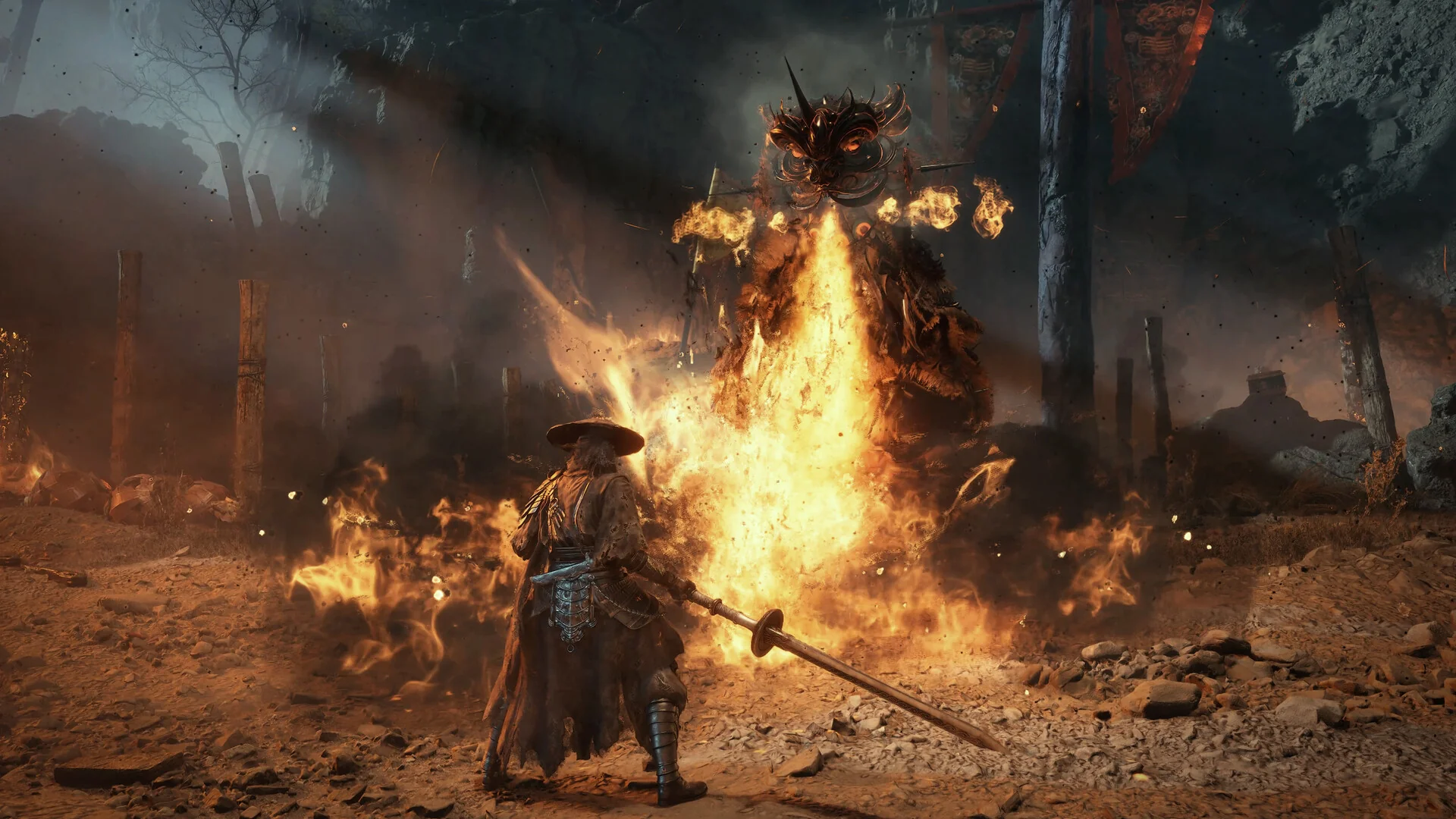
Start on Pathbreaker unless you already know you want a lighter time. Two reasons:
- It is the balance target. The developers tuned enemy aggression, guard durability and damage around it; Wayfarer is a deliberate step down from that baseline, not the baseline itself.
- You can move the slider later. If a boss stalls you, dropping to Wayfarer for that fight and going back up afterwards costs nothing — no trophy, no ending, no penalty.
Pick Wayfarer if this is your first character-action game or you are here for the Wulin world. Pick Hellwalker if you have finished Nioh or Sekiro and want the parry system to be the point.
If a single boss is the wall rather than the whole game, check whether it is optional before you lower the setting — the boss list marks required fights, and skipping an optional one is sometimes the real difficulty slider.
Can you change difficulty mid-run?
Yes, for the first three. The setting lives in the pause menu, so it is a per-fight decision rather than a binding contract.
66 Days is the exception. It has to be selected when you begin a new game, and it cannot be switched into mid-run. That is deliberate: the mode's whole premise is that you accepted the risk at the start.
Does difficulty affect trophies?
No. The platinum roadmap says plainly that no trophy asks for a difficulty, an ending, or 66 Days, and that all 36 fit in a single playthrough on any of the first three settings. The director said the same thing before launch.
That makes difficulty a comfort setting, not a completion requirement. If you were planning to suffer through Hellwalker for a trophy, you can stop planning.
What does 66 Days actually change?
Two things, and only one of them is combat:
- The enemies. Same tier as Hellwalker — aggressive, more skills, reactive AI.
- The lives. Each death consumes one of Soul's 66 days. Exhaust them and the run ends.
On the other three modes the 66 days are narrative, not a timer: days advance at story beats, and side quests or exploration do not burn them. That distinction is the single most misunderstood thing about the mode, and it is why "66 days" sounds more stressful than the game usually is.
How hard is the game, really?
The consistent picture from people who finished it: hard at the start, easier in the middle. Push Square describes a downward difficulty curve, because the gear you pick up after the first chapter does more for you than the next region's enemies do against you.
Two mechanical reasons the difficulty is softer than a Soulslike:
- Blocking always works as a safe way to observe a pattern. Only heavy attacks and red-flash grabs break the rule, and both are signalled.
- Parry and dodge windows are generous by genre standards — closer to character-action timing than to a souls game.
Our parry guide drills the two colour cues, and the combat guide covers the slots you are choosing between.
Is Phantom Blade Zero a Soulslike? (vs Black Myth: Wukong & Sekiro)
No, developer S-GAME defines Phantom Blade Zero as a Kungfupunk Character-Action RPG, not a punishing masocore Soulslike. While it features intense multi-phase boss encounters, dark atmospheric wuxia landscapes, and timing-based defense, key design pillars separate it from FromSoftware titles:
- No stamina gauge: Soul can sprint, dodge, chain normal attacks, and leap continuously without an arbitrary stamina meter depleting.
- Selectable difficulty settings: Unlike Dark Souls, Elden Ring, or Bloodborne, players can freely switch between Wayfarer, Pathbreaker, and Hellwalker at any pause menu checkpoint.
- Generous defensive windows: Deflect and dodge cancel windows are broader than Sekiro, designed around kinetic martial arts choreography rather than pixel-perfect microsecond punishment.
Comparison: Phantom Blade Zero vs Black Myth: Wukong
| Feature | Phantom Blade Zero | Black Myth: Wukong |
|---|---|---|
| Genre | Kungfupunk Character-Action RPG | Mythological Action RPG |
| Stamina System | None — unlimited attack & sprint chains | Core stamina gauge limiting dodges & attacks |
| Difficulty Option | Three selectable at start + 1 post-game | Single fixed difficulty with no slider |
| Defensive Focus | Directional deflections, blade parries, Ghost Steps | Perfect dodges, cloud step, rock solid parry spell |
| Weapon Variety | 30 dual/single swords + Phantom Edge tools | Staff stances (Smash, Pillar, Thrust) + transformations |
If you found Black Myth: Wukong manageable, Phantom Blade Zero on Pathbreaker offers a comparable, highly satisfying challenge with significantly faster offensive momentum.
How to counter unblockable Red Attacks
During high-intensity boss encounters, enemies will frequently flash with distinct visual tells:
- Gold / White Flash: Standard heavy strikes that can be safely parried or deflected to rapidly deplete the boss's poise gauge.
- Red Flash (Unblockables & Grabs): Devastating command grabs or piercing strikes. Holding block against a red attack results in an instant guard break.
To counter red attacks, you have two reliable options:
- Directional Ghost Step (Dodge Roll): Tap dodge towards or around the enemy's blind spot as the red aura peaks to trigger a slow-motion dodge counter.
- Ghost Step Deflection Tool: Equip a specialized secondary tool (such as defensive Phantom Edge tools) that converts unblockable thrusts into counter-openings.
What is not confirmed
| Question | Status |
|---|---|
| Exact stat multipliers per mode | Not published — descriptions are qualitative |
| Whether Hellwalker is selectable on a brand-new save | Disputed — two hands-on sources say yes, one guide says NG+ only |
| Whether 66 Days tracks deaths separately from days | Unclear — both are described as the same pool |
| Whether patches changed the balance | Likely — a large balance update shipped before launch |
Sources
- Push Square: how difficult is Phantom Blade Zero — hands-on mode descriptions, difficulty curve
- Beebom: difficulty modes explained — four-mode breakdown, adaptive AI
- Keen Gamer: trophy list and platinum roadmap — no difficulty requirement, mid-run switching
- Fextralife wiki — preview-era naming, useful as the source of the Gamechanger confusion